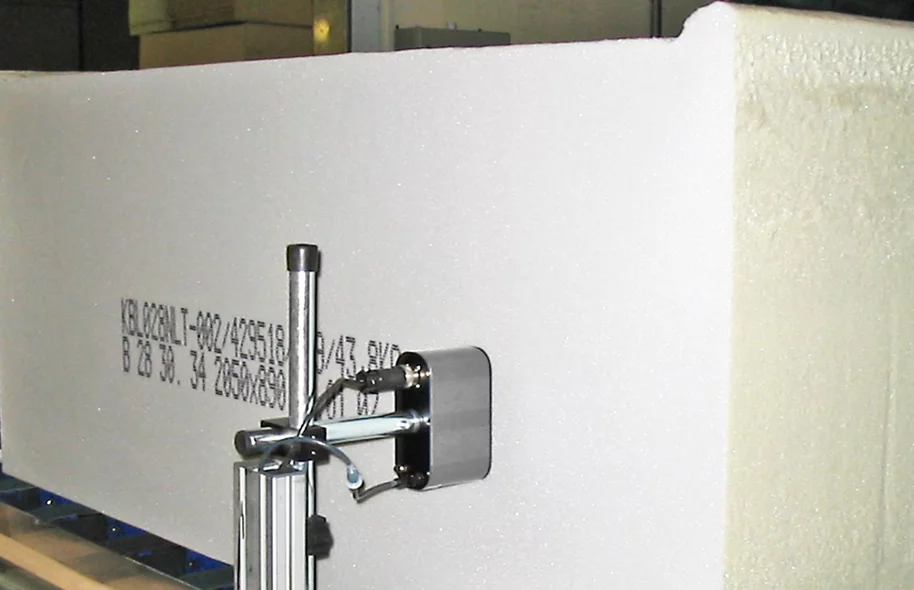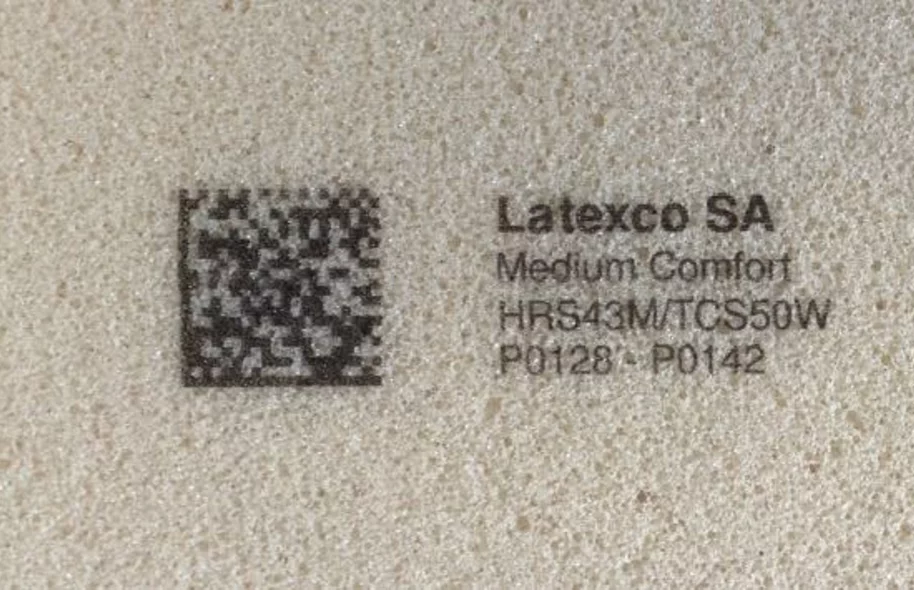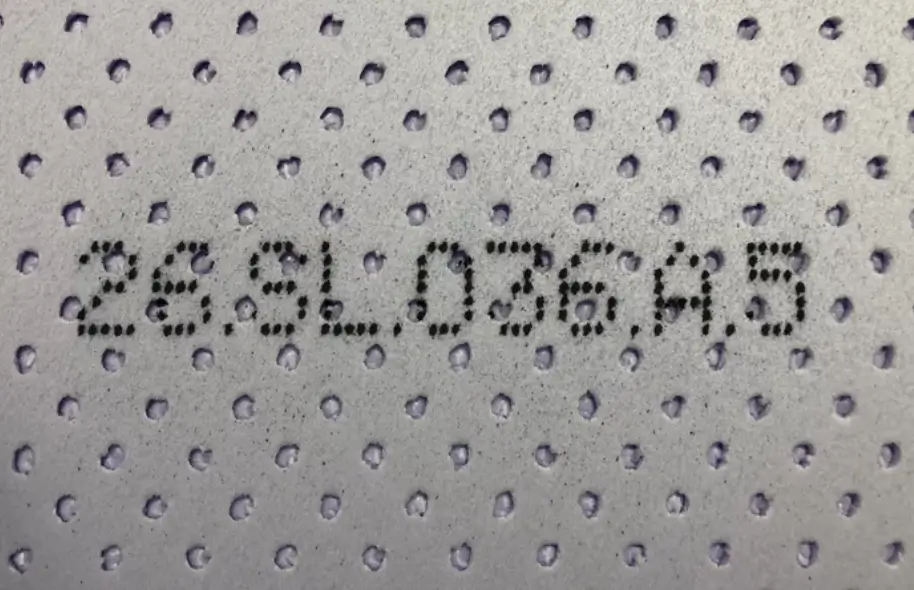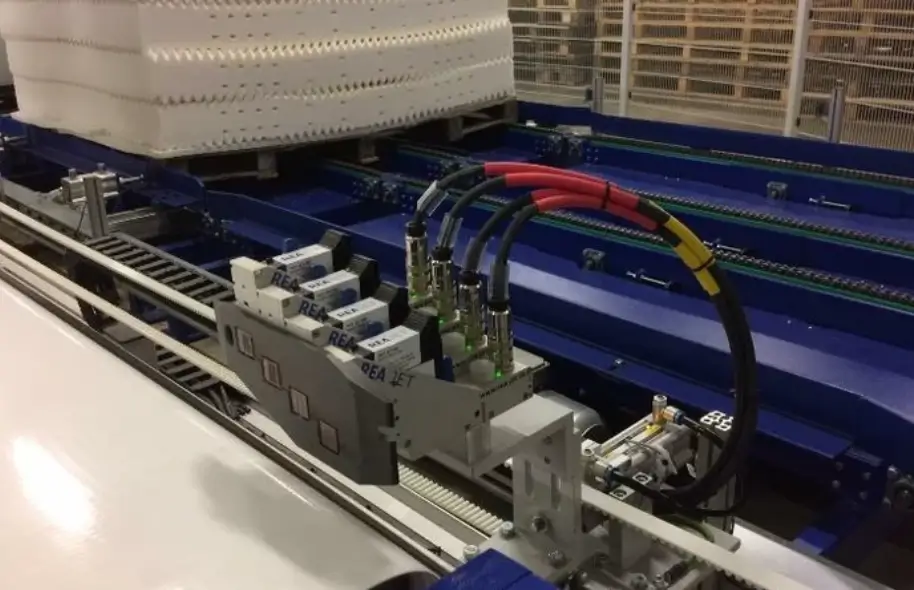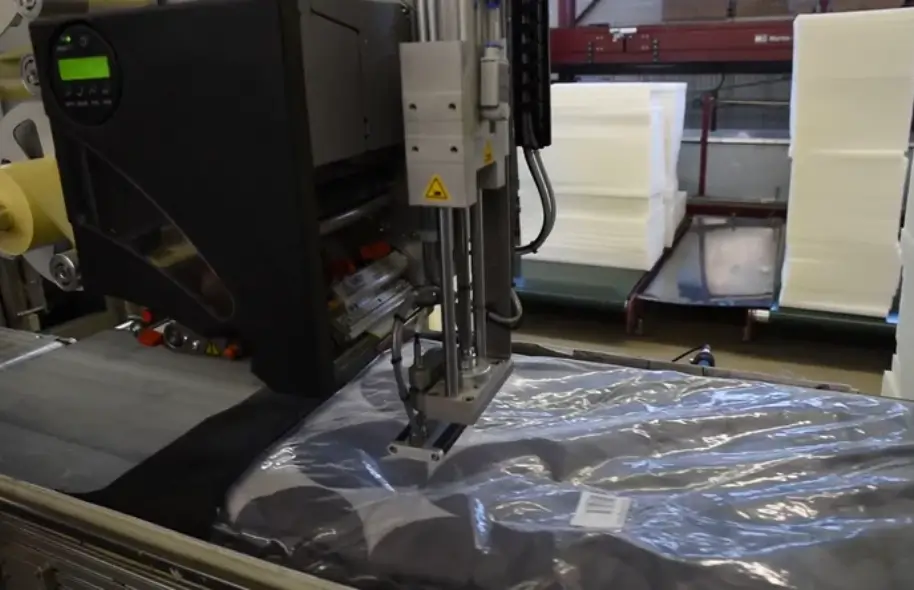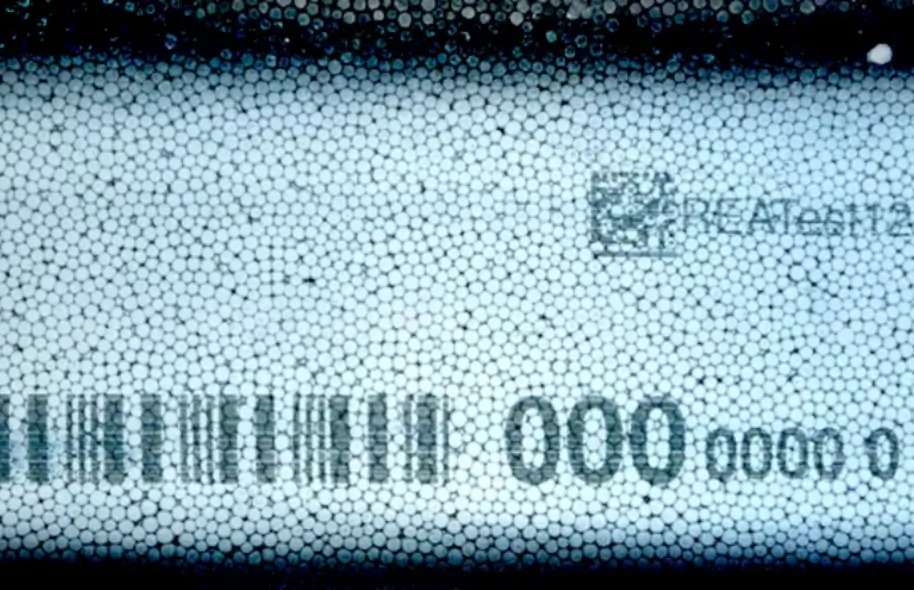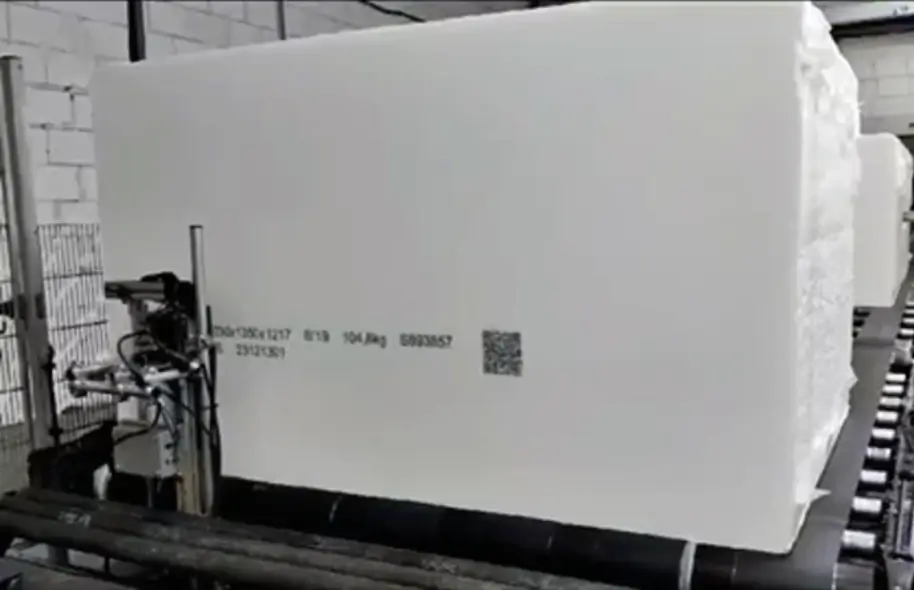

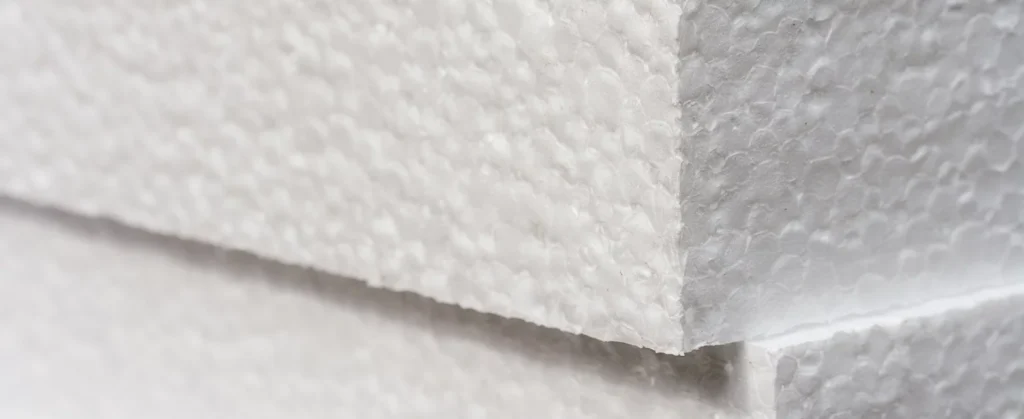


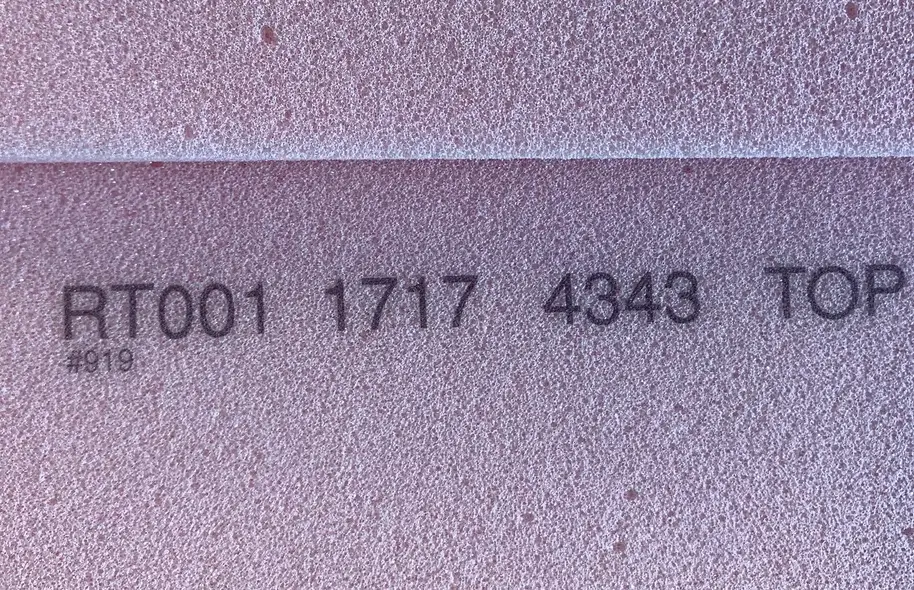
Foams and polystyrene are plastics that are used by many different industries, for example as packaging material for sensitive products or as building materials in the construction industry. Furniture manufacturers need foam elements as upholstery and orthopaedic technicians use them to make seat shells or positioning aids. Depending on the strength, weight and color requirements, polyethylene foam, polypropylene foam, polystyrene foam and polyurethane foam are used. Foam processors mark their products with production data such as batch numbers and date of manufacture for complete traceability, but also with material information such as the PE mark, manufacturer logos or the CE marking. In addition, they often print cut lines, stencil lines or assembly lines that they need for their manufacturing process.
When selecting a marking and labeling solution, the properties of the foam in question should be taken into account: Rigid foam, molded foam and flexible foam each place different demands on the marking technology.
Challenges when marking foam surfaces
- Optimum coordination of foam type and marking technology
- Marking under industrial environmental conditions
- Fast application in automated production lines
- Compliance with legal and industrial standards