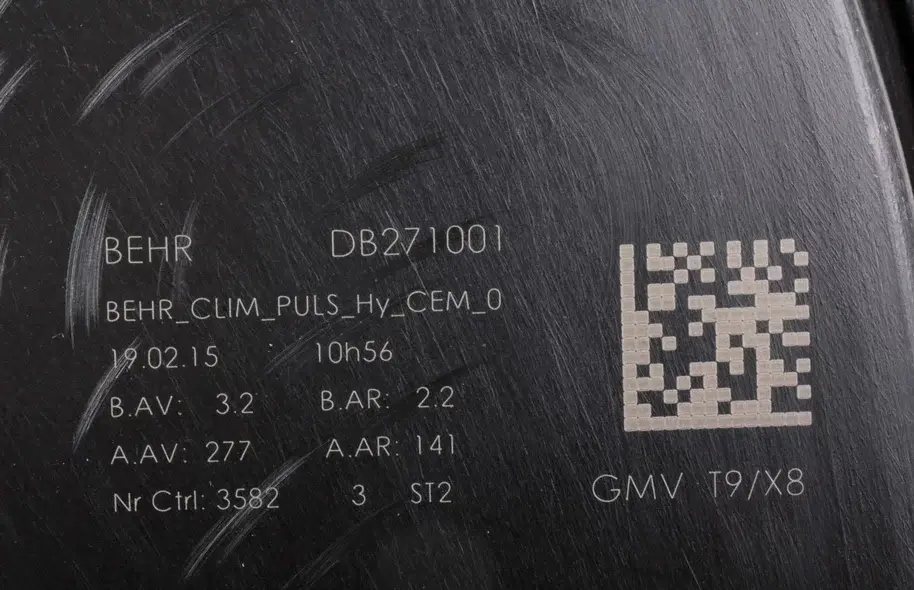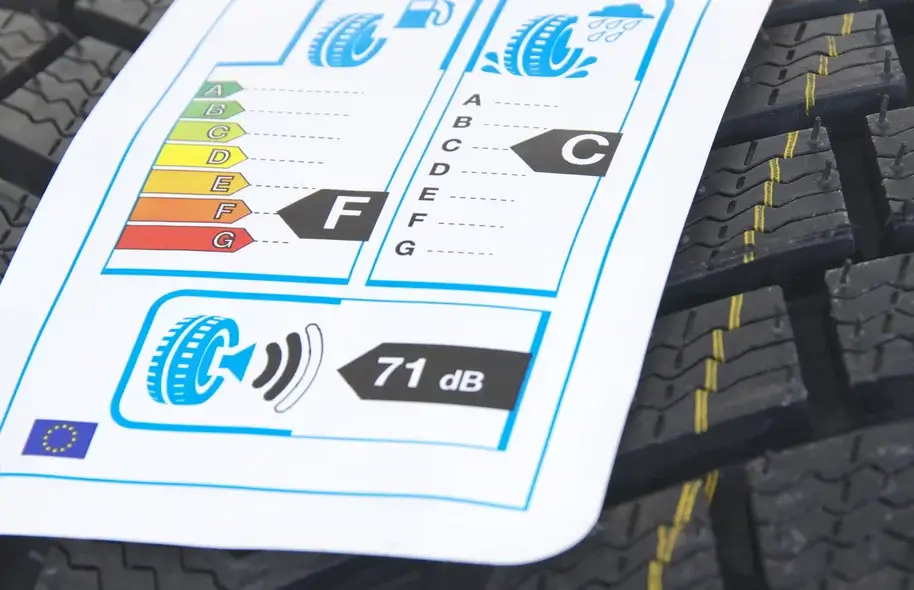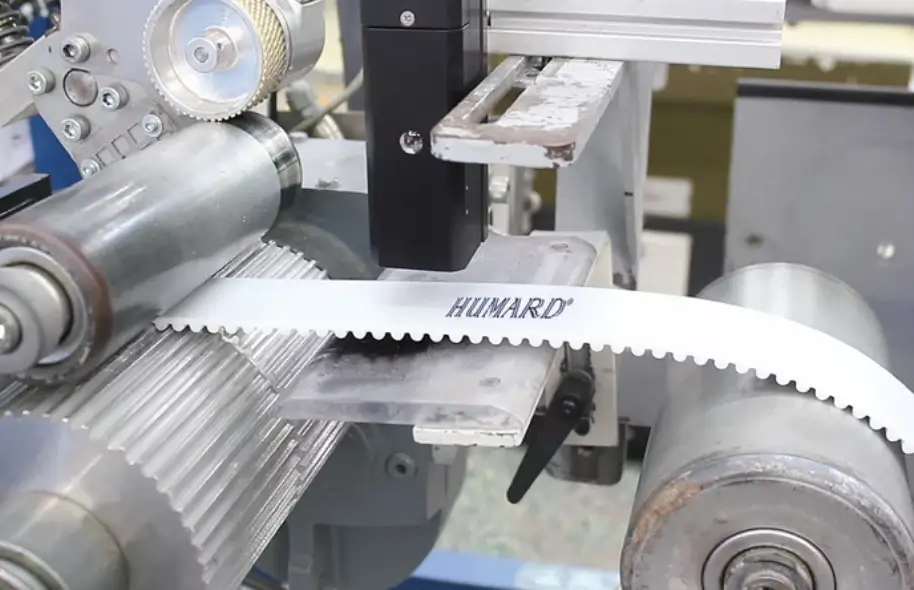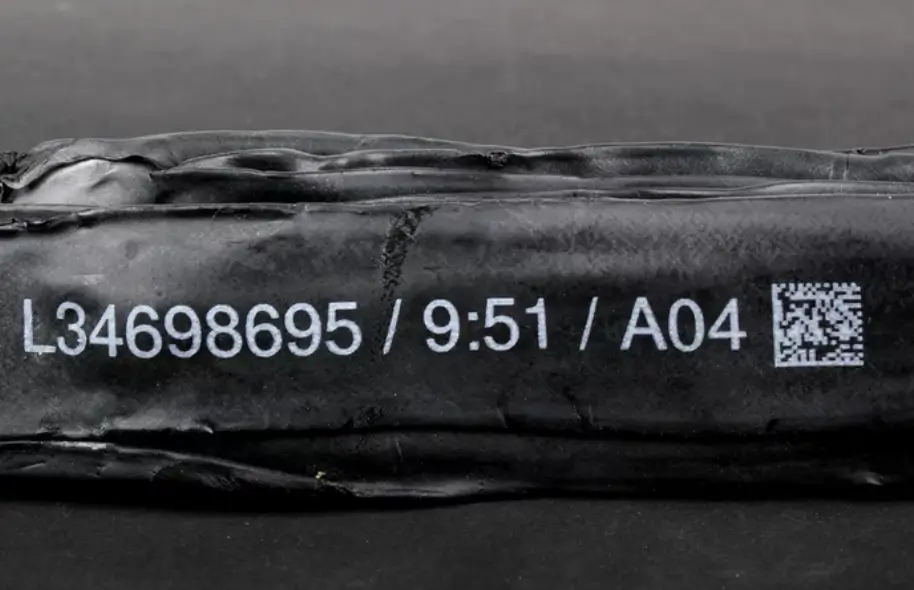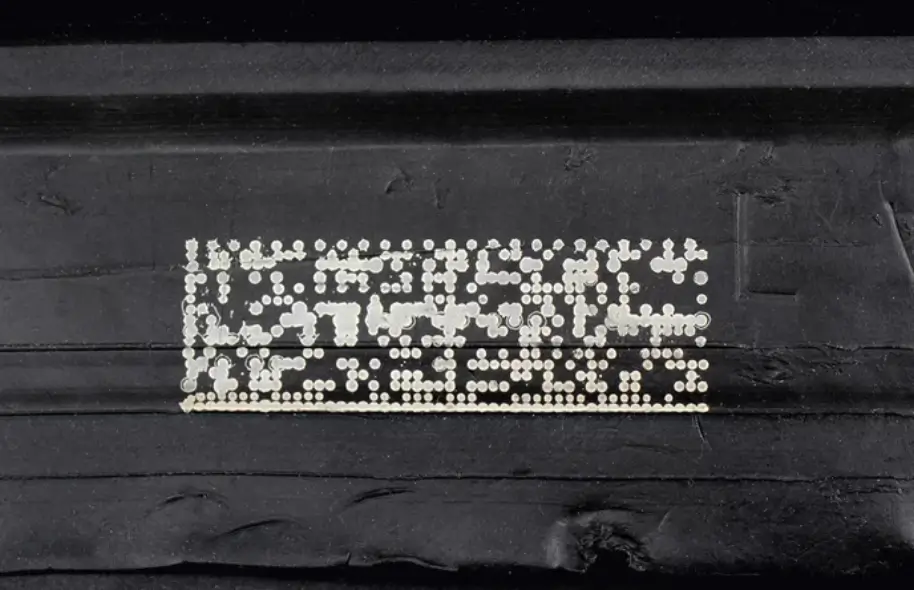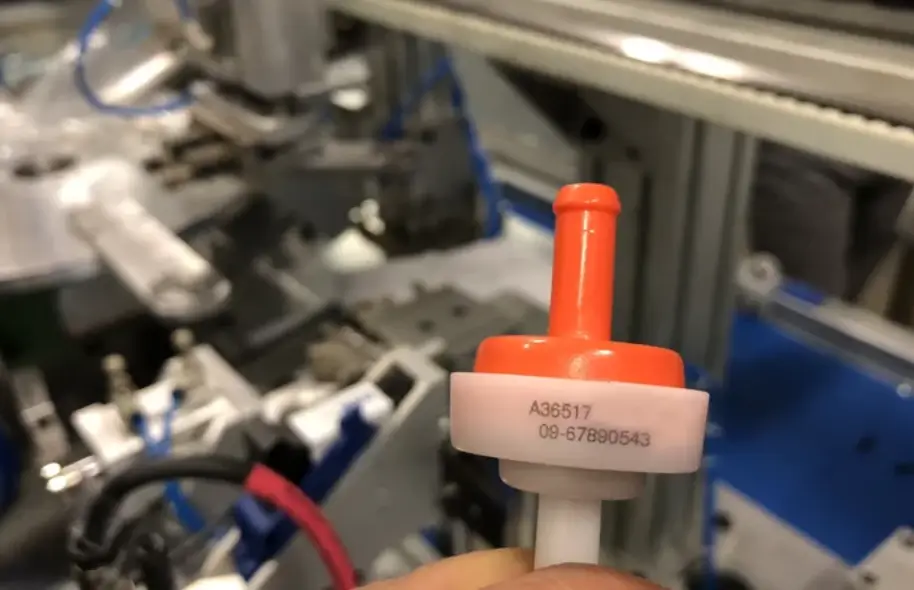

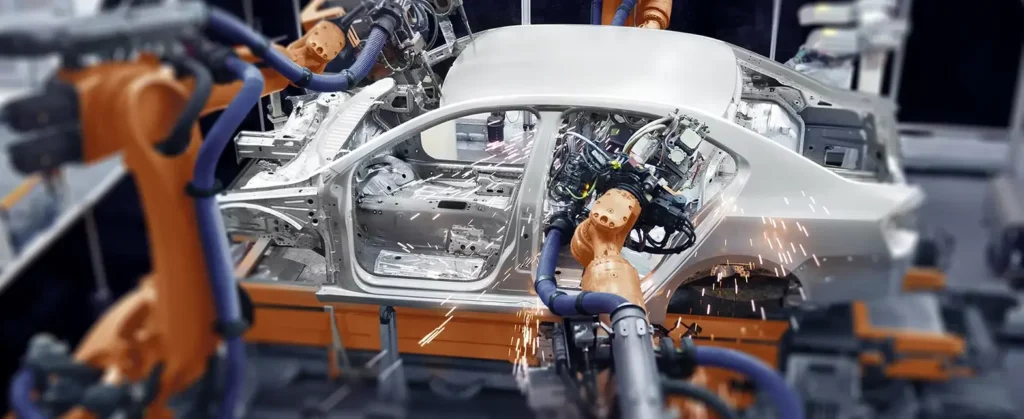



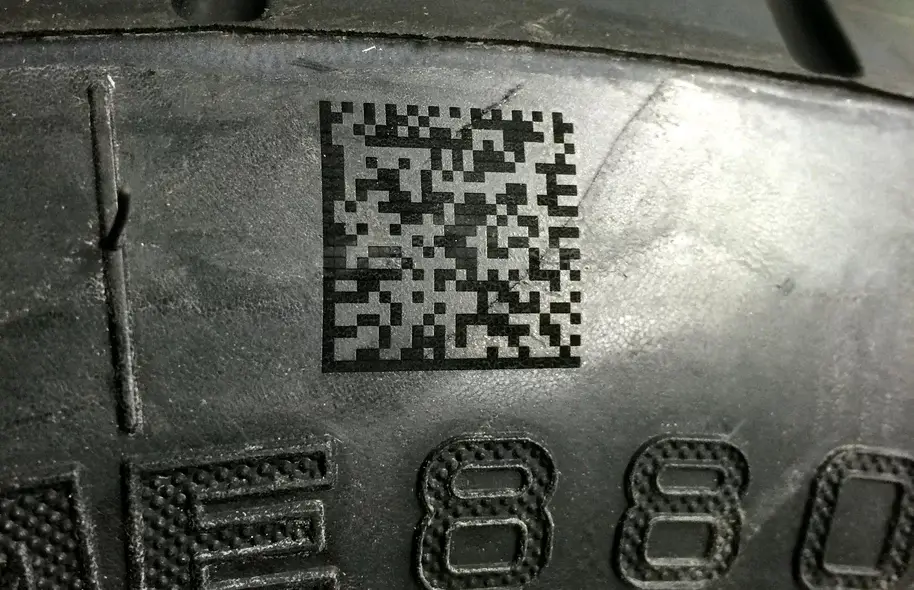
Whether tires or soot particle filters, seat covers or manual transmissions: the automotive industry and its suppliers have to mark components made of various metals and plastics, textile materials and rubber in a secure and traceable manner. The strict specifications and standards for this come from the EU, vehicle manufacturers and associations such as VDA (German Association of the Automotive Industry) and Odette, among others.
In the automotive supply chain, component marking is used for clear identification and seamless traceability. The non-contact direct marking process (DPM – Direct Part Marking) is often used for this purpose. This allows the high safety standards of the automotive industry to be met and, in the event of quality problems and recalls, faulty batches can be identified and traced fast. Due to the often large quantities involved, the codes and labels applied must be clearly readable and automated and remain so throughout the entire product life of a component in the vehicle. The direct marking of vehicle parts also plays an important role in plagiarism protection, intralogistics and logistics. Markings and labels with component and transport information ensure automated manufacturing and assembly processes as well as efficient transport routes.
The challenges of marking in the automotive industry
- Versatile different materials, shapes and components
- Marking partly under harsh environmental conditions
- Resistance to moisture, heat, cold and mechanical stress
- Automated direct marking for reliable traceability
- Generation of machine-readable codes
- Compliance with VDA standards, REACH conformity, EU End-of-Life Vehicles Directive 2000/53/EC (IMDS)